

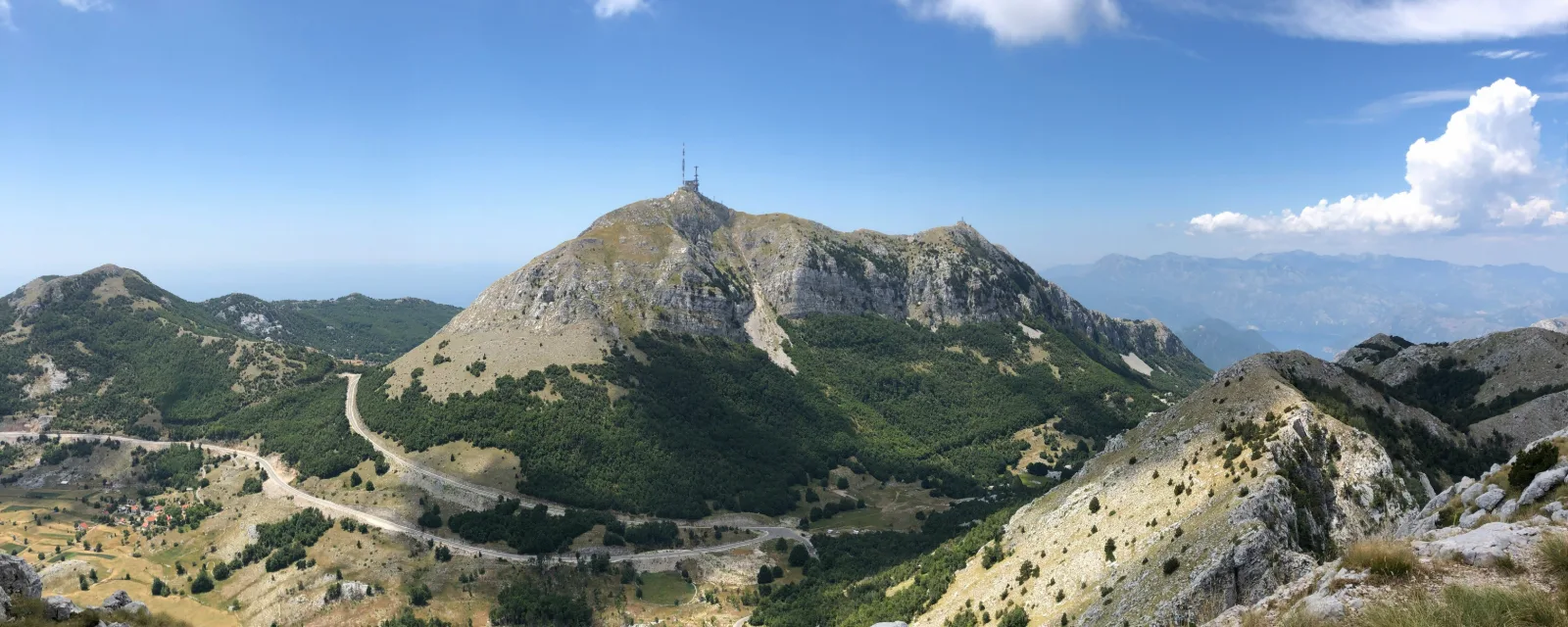
Cetinje
Cetinje is a small town in a karst field below Mount Lovćen, half an hour's drive from Budva, yet its climate and atmosphere are completely different from the coast. This was the capital of Montenegro for centuries, and you see it at every step: a palace, a monastery, museums and the buildings of the great powers' former embassies stand in streets of low houses. The town is quiet, with tree-lined avenues and parks, and summers are cooler here than on the coast. One day is enough for Cetinje and Lovćen, but you come away feeling you've met the real Montenegro.
Things to do
Start at Cetinje Monastery, which keeps precious relics and old books. Right next to it is the Biljarda, the residence of Prince-Bishop Njegoš, named after a billiard table carried in over the mountains, and in its courtyard there's a large relief map of Montenegro. King Nikola's palace is now a museum, with furniture, weapons and decorations. Walk past the buildings of the former Russian, French, British and other legations. Then drive up Lovćen to Njegoš's mausoleum on Jezerski Vrh, and to the village of Njeguši, where ham is cured and cheese is made.
Tips
The road up Lovćen has lots of bends, and from the car park you climb about 460 steps to the mausoleum, so bring water and a jacket, because it's windy at the top. The viewpoint by the mausoleum looks over the Bay of Kotor, Lake Skadar and the mountains of Albania. In Njeguši, sit down in one of the houses with a tavern and try Njeguši ham, cheese and mead. You can also reach Cetinje by the old road from Kotor, with 25 hairpin bends and a view you won't forget. The museums share a combined ticket, so ask about it.
Did you know?
Cetinje was founded in the late 15th century, when Ivan Crnojević moved his capital here and built the monastery. In 1494 the Oktoih was printed in Cetinje, the first book in the Serbian recension of Church Slavonic printed among the South Slavs. According to tradition, Cetinje Monastery keeps the right hand of St John the Baptist and a piece of the True Cross. Njegoš's mausoleum on Lovćen was built in 1974, to a design by the sculptor Ivan Meštrović. The fence around the Vlaška Church is made from the barrels of rifles captured in battles with the Ottomans.