

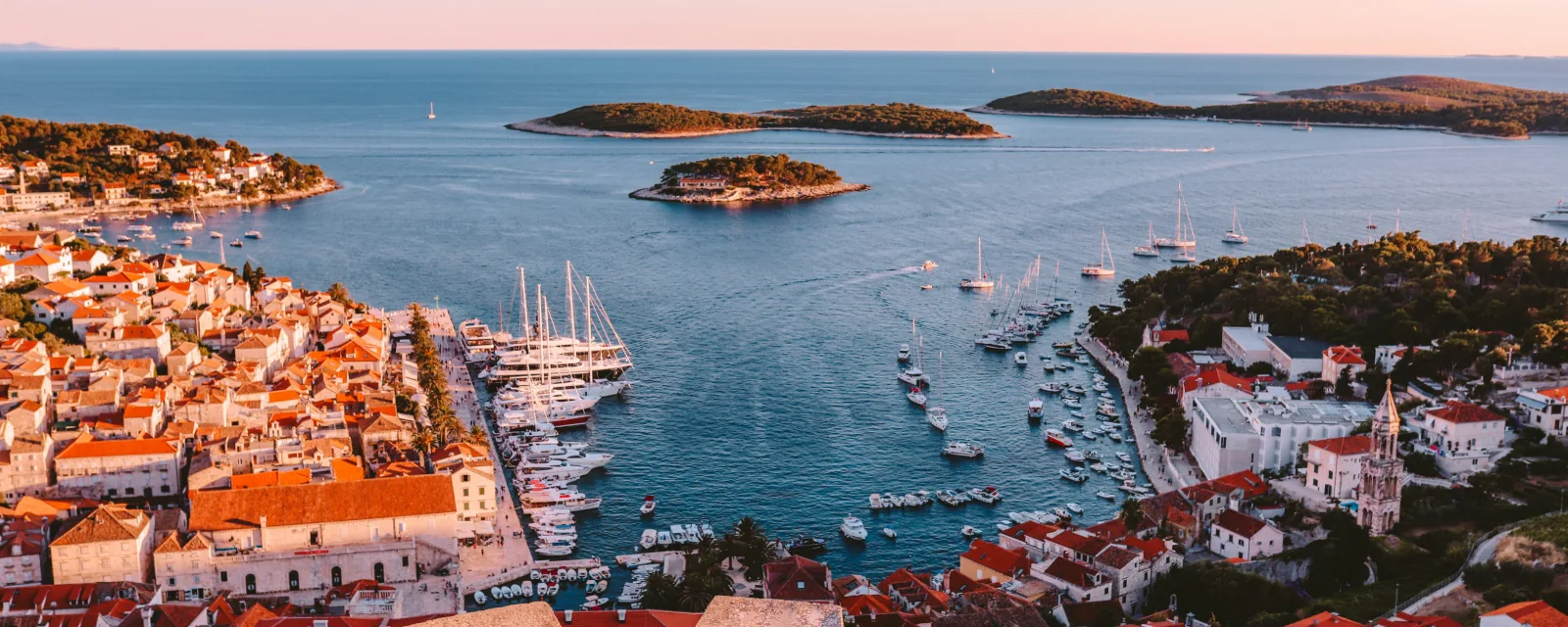
Hvar
Hvar is a long, narrow island in central Dalmatia, known for its sun, its lavender and a town where the most expensive yachts in the Adriatic dock in summer. Hvar Town itself is beautiful, loud and pricey, and in season it doesn't sleep. Cross the hill, though, and everything changes. Stari Grad, Jelsa and Vrboska live at a slower pace, and inland there are stone villages, vineyards and olive groves where you'll meet almost no one. Hvar has two faces, and it's best to get to know both.
Things to do
In Hvar Town everything happens on the Pjaca, the large square that runs from the cathedral down to the harbour. From there, steps and a path through pine woods bring you in about twenty minutes to the Fortica fortress, with a view of the rooftops, the harbour and the Pakleni Islands. Taxi boats run to those islets all day, and that's where the swimming is best, in coves with pine trees and a clean seabed. Stari Grad, on the other side of the island, is quieter and older. Walk its streets, step into Tvrdalj and rent a bike for a ride across the Stari Grad Plain. By car, it's worth taking the old road across the island, through the abandoned villages of Velo and Malo Grablje.
Tips
If you're not coming for the nightlife, stay in Stari Grad, Jelsa or Vrboska. Accommodation is cheaper, there's room on the beach, and Hvar Town is half an hour away. The ferry from Split docks in Stari Grad, and the catamaran in Hvar Town. In July and August, buy your car ticket in advance. Lavender blooms in late June, and the fields around Brusje and Velo Grablje turn purple. For dinner, order gregada, fish cooked with potatoes and olive oil, and a glass of Plavac from the island's southern slopes. In Jelsa and the nearby villages there are still taverns where the owner does the cooking and the pouring himself.
Did you know?
Hvar gets more than 2,700 hours of sunshine a year and is considered the sunniest island in the Adriatic. Stari Grad was founded in 384 BC by Greeks from the island of Paros, who named it Pharos. The plain they divided into regular plots is still farmed in the same way today, which is why it's on the UNESCO list. In 1612 one of the first public theatres in Europe opened in Hvar Town, on the upper floor of the Arsenal, open to nobles and commoners alike. The Pakleni Islands have nothing to do with hell ("pakao"). The name comes from "paklina", the pine resin once used to coat ships.