

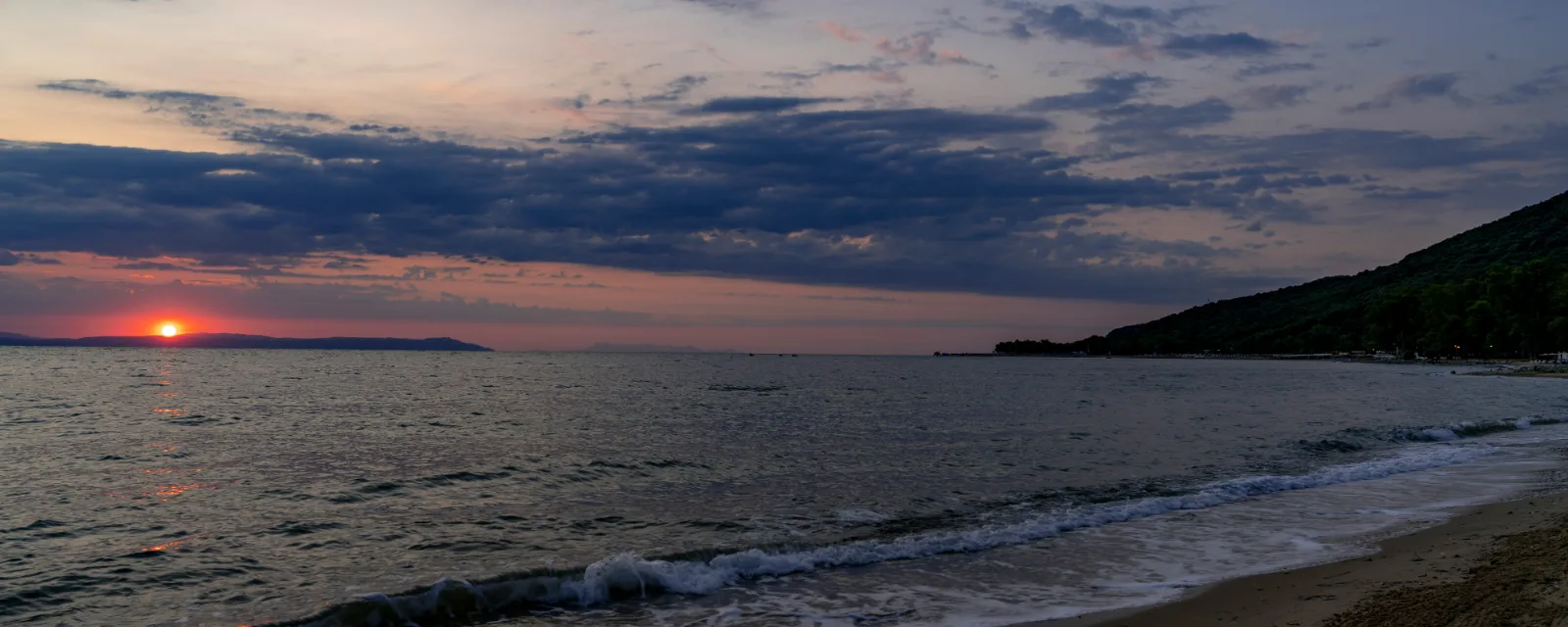
Igalo
Igalo is a place right at the entrance to the Bay of Kotor, next to Herceg Novi, known for its healing mud and one of the largest rehabilitation centres in the region. People come here to recover after operations, with rheumatism and back pain, but families who want a calm sea come too. Unlike Herceg Novi, Igalo is flat, so it's easy to walk around, and the beach is partly sandy. A seaside promenade connects it with Herceg Novi, so it's easy to go into town in the evening.
Things to do
If you've come for your health, the day is spent on treatments at the institute, with mud, baths, massages and exercises. The rest of the time is for the sea: Igalo's beach has dark sand brought down by the Sutorina river, and the water is shallow and calm. The Pet Danica promenade follows the sea towards Herceg Novi, Savina and Meljine, so you can walk for hours. Boats from Igalo and Herceg Novi go on trips to Luštica, the Blue Cave and Mamula island. Kotor and Perast are half an hour's drive away, and Dubrovnik less than an hour.
Tips
For treatments at the institute, people usually book a package with accommodation, so ask in advance and bring your medical records. The mud isn't applied on your own at the beach, but under a doctor's supervision. In summer Igalo is easier than Herceg Novi for older people, because there are no stairs. February brings the Mimosa Festival, and Igalo is then full of guests who come for off-season treatments too. Eat fish at the restaurants on the promenade.
Did you know?
The healing mud, or peloid, lies on the seabed in Igalo Bay, where it's deposited by the Sutorina river, and it has been extracted and used for treatment for decades. The Igalo Institute was founded in the mid-20th century and became one of the largest physical medicine and rehabilitation centres in Europe. Josip Broz Tito had a villa in Igalo where he spent a good deal of time. The Pet Danica promenade follows the route of a former narrow-gauge railway and is about seven kilometres long.