

Kragujevac
Kragujevac is the largest city in Šumadija and the place where modern Serbia took shape. Prince Miloš made it his capital in 1818, and over the next twenty years or so the city got the country's first grammar school, first theatre, first newspaper and first factory. Later it became a city of workers, cannons and cars. It isn't polished for tourists, but it's honest and welcoming, with good taverns and plenty of greenery. It's close enough to Belgrade for a day trip, and there's enough to see for a whole weekend.
Things to do
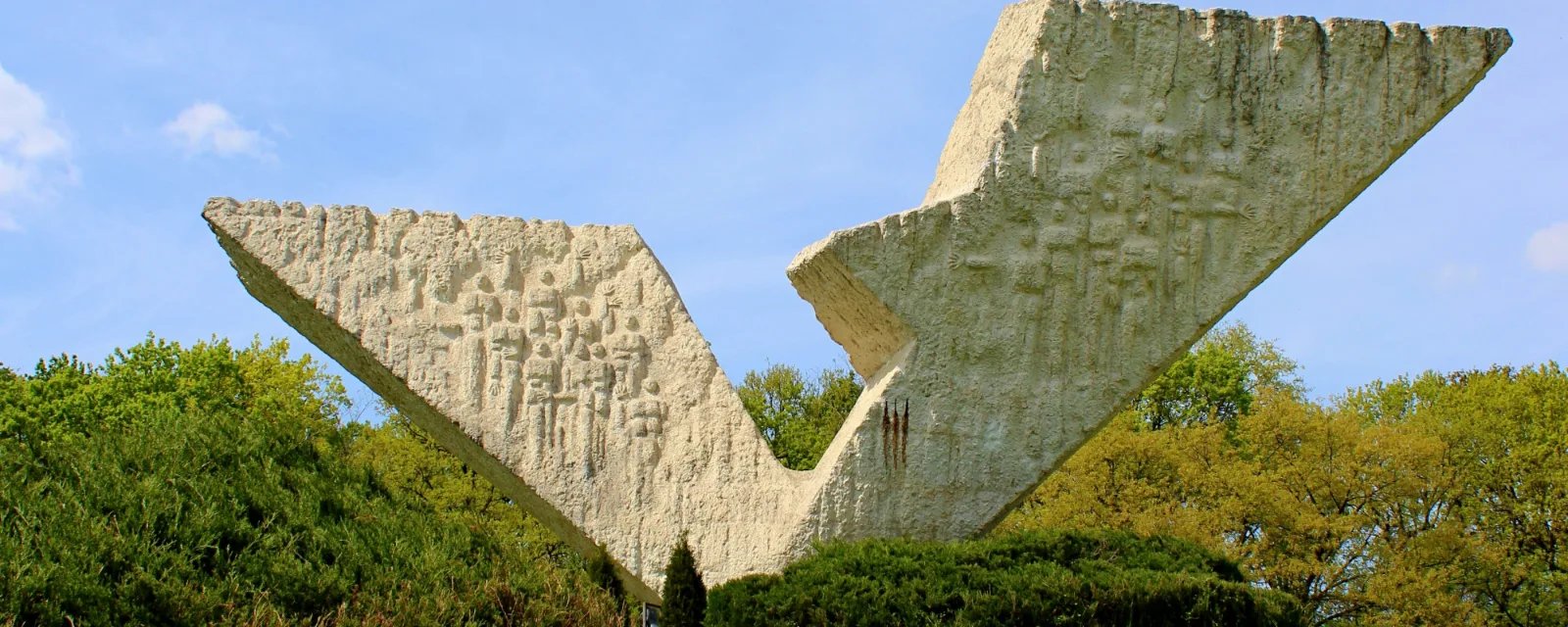
Start at Miloš's Circle, by the Lepenica river, with the Old Church, Amidža's Residence and the Old Assembly building, where the Sretenje Constitution was adopted in 1835. A few minutes away is the Prince's Arsenal, a complex of old red-brick factory halls, with the Old Foundry museum. The most important place in the city is Šumarice, a large memorial park on the site where thousands of citizens were shot in October 1941. The museum and the monuments, scattered across the meadows, can be visited on foot or by car. For a break there's the Great Park, Lake Bubanj and the city Aquarium, which children enjoy.
Tips
Allow at least two hours for Šumarice and go into the museum first, so that you understand what you see outside afterwards. In the centre, sit down in one of the old taverns and order a Šumadija breakfast or roast meat. Kragujevac is a good starting point for trips: Topola and Oplenac, with the church and mausoleum of the Karađorđević dynasty, are about forty kilometres away, and the monasteries of Drača, Kalenić and Ljubostinja are also close. In summer people swim in the Šumarice and Gruža lakes. In June there's Arsenal Fest, a music festival in the old factory halls.
Did you know?
Kragujevac was the capital of Serbia from 1818 to 1841. The first grammar school was founded here in 1833, the first theatre in 1835 and the Lyceum in 1838, from which the University of Belgrade later grew. The first cannon in Serbia was cast in the local foundry in 1853, and out of it came the Zastava factory, which made the Fića and the Yugo for decades. The monument to the executed pupils and teachers in Šumarice is shaped like the Roman numeral five, for the fifth-year grammar school class whose pupils were killed. The city's name comes from the "kraguj", a kind of falcon once used for hunting.