

Ohrid
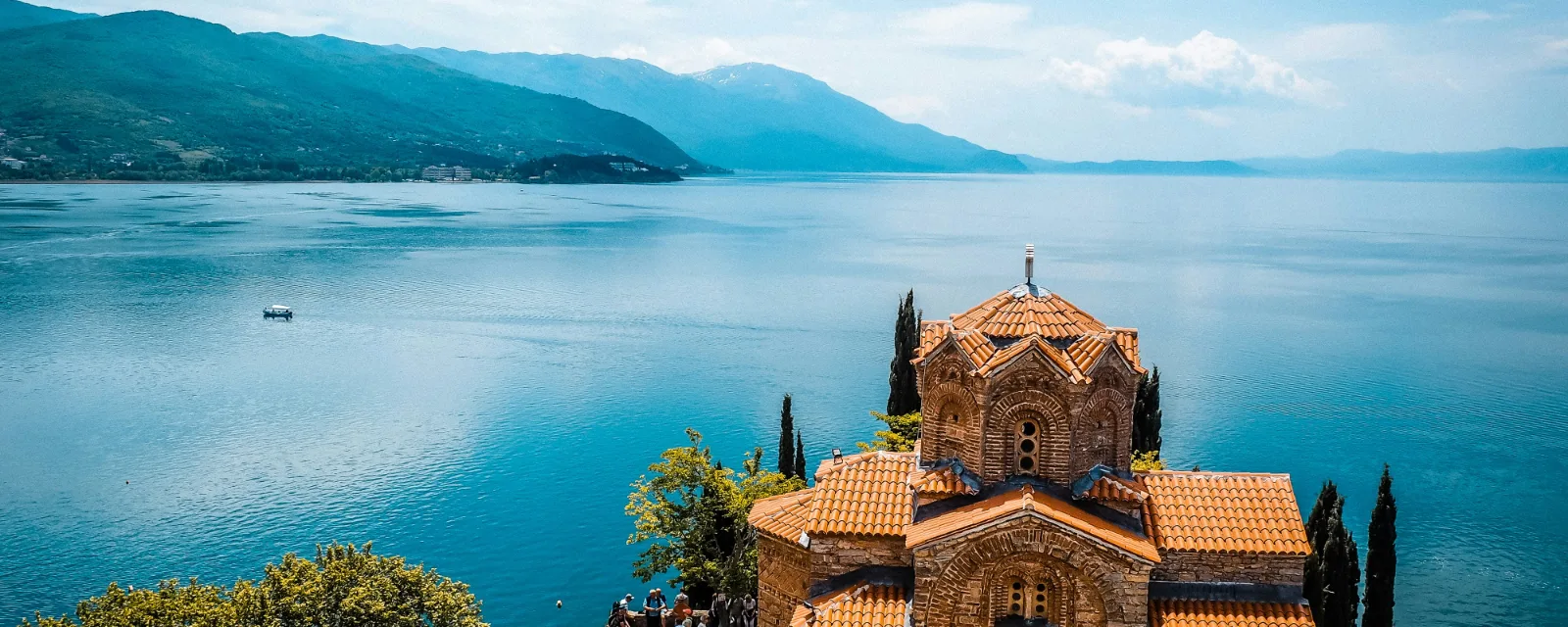
Ohrid is a town on the shore of the lake of the same name, in south-west North Macedonia, and one of the most beautiful places in the whole of the Balkans. The old town climbs a hill, with houses of stone and wood, churches at every step and a fortress at the top. Below is the lake, so clear you can see the bottom metres down. For centuries Ohrid was a religious and cultural centre of the Slavs, and today it's a place equally good for sightseeing, swimming and eating.
Things to do
Walk from the harbour through the old bazaar to the Church of St Sophia, with 11th-century frescoes, and on to the ancient theatre. From there, climb to Samuel's Fortress, with a view over the whole town and lake. Go down to Plaošnik, where the Church of Saints Clement and Panteleimon has been rebuilt, and then along the shore path to the Church of St John at Kaneo on a rock above the water, the best-known image of Ohrid. Go by boat or car to St Naum Monastery, at the southern end of the lake, where water bursts from springs and rowing boats glide through clear channels. On the way, at the Bay of Bones, there's a reconstructed settlement on stilts above the water.
Tips
Come to Kaneo before sunset, when the light is at its best, and allow half a day for St Naum. Swim at the town beaches or, better still, at the beaches south of town towards St Naum, where the water is clearest. Ohrid trout is protected, so look for other lake fish on the menu, such as belvica and eel. Buy Ohrid pearls only in shops run by families who have made them for generations. In July and August the Ohrid Summer Festival brings open-air concerts and plays.
Did you know?
Lake Ohrid is one of the oldest lakes in the world, over a million years old, and it's home to species found nowhere else. The town and the lake have been on the UNESCO World Heritage List since 1979 and 1980. St Clement of Ohrid founded one of the first Slavic schools here at the end of the 9th century, so Ohrid is considered the cradle of Slavic literacy. Ohrid is said to have once had 365 churches, one for every day of the year. Ohrid pearls are made from the scales of a small fish called plasica, to a secret family recipe.