

Opatija
Opatija is where tourism on the Adriatic began. In the mid-19th century there was just a handful of fishermen's houses around an abbey here, and fifty years later emperors, composers and Viennese high society were coming to spend the winter in the mild air of Kvarner. From that time it has kept its villas, hotels with terraces over the sea and parks with exotic trees. Opatija is still elegant and a little old-fashioned today. People walk here more than they lie on the beach, and it's lovely at any time of year.
Things to do
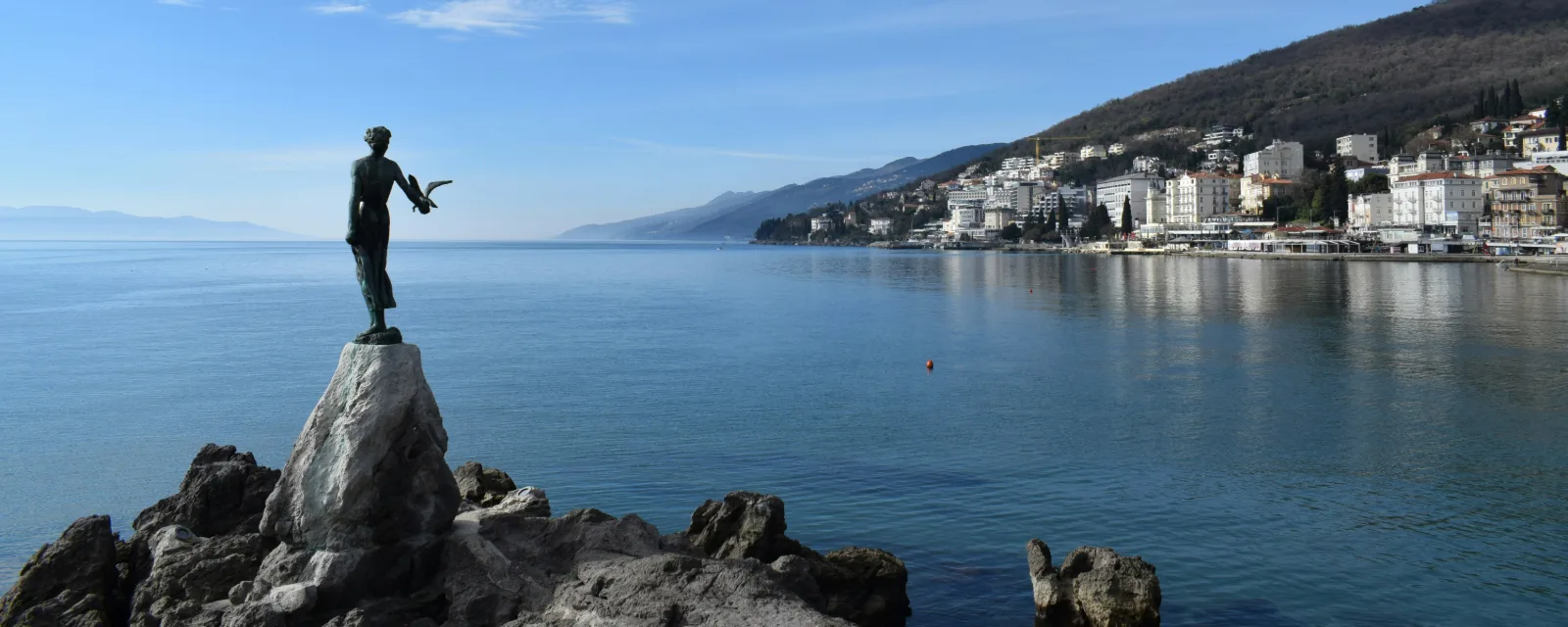
The main thing to do is walk the Lungomare, a promenade right by the sea, twelve kilometres long, from Volosko to Lovran. You don't need to do it all; the stretch from the centre to Volosko is enough for an hour's easy walk. Along the way are the statue of the Maiden with the Seagull, the little Church of St James and Villa Angiolina, surrounded by a park with camellias. You swim from the concrete beaches in the centre, Slatina and Lido, or from the pebbles in Ičići. Volosko, an old fishing village at the end of the promenade, is known for its restaurants. Above the town is Mount Učka, whose summit, Vojak, you reach by car and a short walk, with views of Istria and the islands.
Tips
Opatija isn't cheap, but coffee and cake on the terrace of an old hotel don't cost much and are part of the experience. Don't go swimming with high expectations, because the beaches are urban. For a nicer sea, drive to Mošćenička Draga or take the ferry to Cres. In Volosko, book a table in advance and order Kvarner scampi, which many consider the best in the Adriatic. In October Lovran holds Marunada, a chestnut festival, and in winter Opatija has a carnival and a chocolate festival. Parking in the centre is expensive, so choose accommodation you can walk from.
Did you know?
Villa Angiolina was built in 1844 by Iginio Scarpa, a merchant from Rijeka, who named it after his late wife. That year is taken as the start of tourism in Opatija. The Hotel Kvarner, opened in 1884, was the first hotel on the eastern Adriatic coast. In 1889 Emperor Franz Joseph declared Opatija a climatic health resort, and Gustav Mahler, Anton Chekhov, Isadora Duncan and James Joyce all stayed here. The town's name comes from the Benedictine Abbey of St James, of which a small church in the park remains. The camellia, brought by sailors from the Far East, became the symbol of the town.