

Plitvička jezera
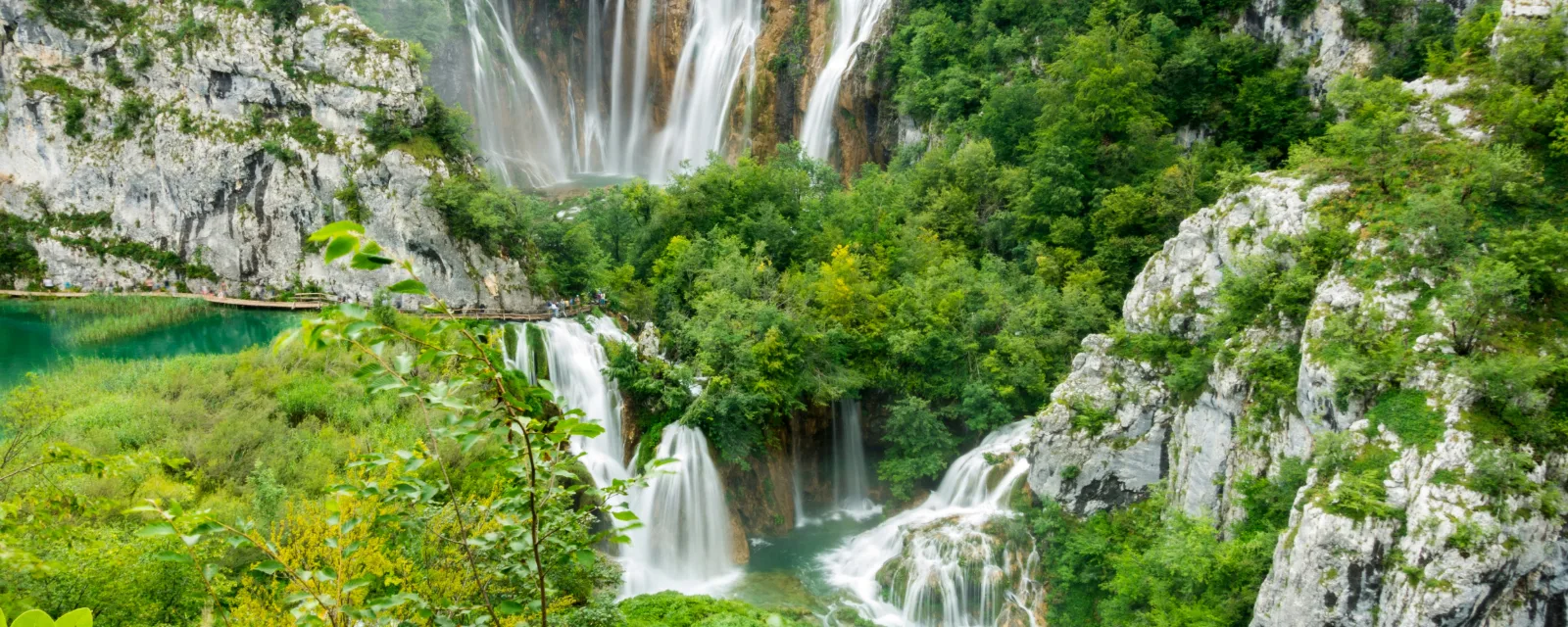
The Plitvice Lakes are Croatia's oldest and most visited national park, in the forests of Lika, halfway between Zagreb and Zadar. Sixteen lakes are strung together like steps, with water flowing from one to the next over hundreds of waterfalls. The colour of the water changes from turquoise to green and blue, depending on the day and the light. Wooden boardwalks run through the park just above the water, so you see the falls up close. It's a place that's beautiful in every season, in snow and in autumn colours alike.
Things to do
The park has two entrances and several marked routes, from two hours to a whole day's walk. The Lower Lakes, with the Great Waterfall, the highest in Croatia, can be seen in two to three hours. The Upper Lakes are a longer walk, through forest and over wooden bridges above the cascades. Between them, you cross the largest lake, Kozjak, by electric boat, and part of the way can be covered by a panoramic tourist train. Half an hour's drive away is Rastoke, part of the town of Slunj, where the Slunjčica river tumbles over falls between old houses and mills.
Tips
In summer, buy tickets online in advance, because the number of visitors per hour is limited. Come as early in the morning as you can, as soon as the park opens, before the tour buses. Swimming in the lakes is forbidden, as is feeding the fish. Wear comfortable shoes and bring water and something to eat, and a jacket even in summer, because it's cooler in the canyon. Outside the season, in spring and autumn, the park is quieter and tickets are cheaper. Look for accommodation in the surrounding villages, with local hosts and Lika cooking.
Did you know?
The Plitvice Lakes became a national park in 1949 and were added to the UNESCO World Heritage List in 1979, among the first in the world. The lakes are still forming today, because travertine, a stone made from calcium in the water, builds up on moss and raises natural dams. The Great Waterfall is 78 metres high. Brown bears, wolves and lynx live in the park's forests. Parts of the Winnetou films were shot here in the 1960s.