

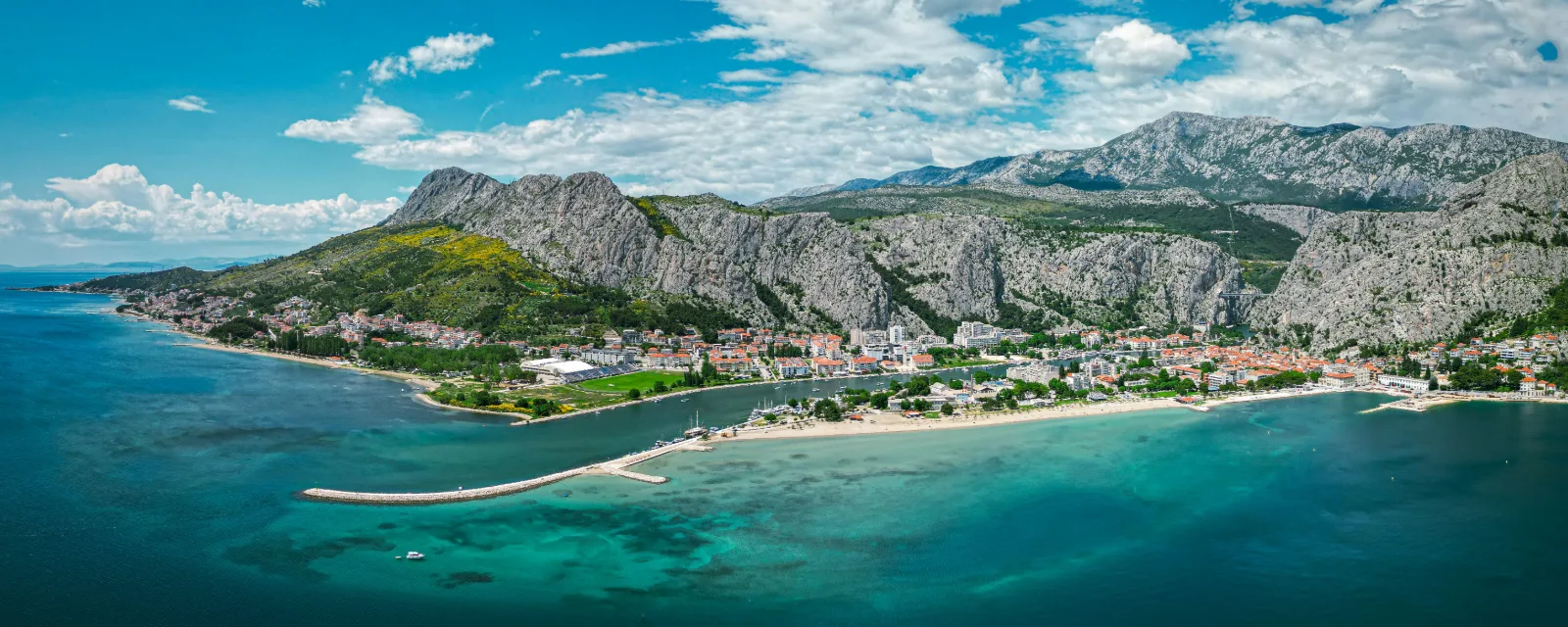
Primošten
Primošten is a small town between Šibenik and Trogir, built on a little peninsula that was once an island. Stone houses climb towards the church at the top, surrounded by a cemetery looking out to the open sea, with coves of pines and beaches on either side. Inland are vineyards enclosed by hundreds of dry-stone walls, a view many people know from postcards. In summer Primošten is lively, with bars and one of the best-known clubs on the coast, and outside the season it returns to its calm fishing-village rhythm.
Things to do
Walk through the narrow streets of the old town to St George's Church at the top, with the sea all around. For swimming there are Velika and Mala Raduča, pebble beaches with pines on the peninsula next to the old town, and a string of smaller coves along the shore. Take the promenade through the pine woods towards Kosica and the hotel beaches. Climb up to the Bucavac vineyards, with a viewpoint over stone terraces edged with dry-stone walls. Boats leave the harbour for trips to the Kornati, Krka and nearby islands.
Tips
The best photo of Primošten is from the road above, as you come down to the sea from the Šibenik direction, so stop at the viewpoint. In the old town, try Babić, a red wine from the surrounding vineyards, and grilled fish. In summer it's almost impossible to find parking in the centre, so leave the car at the entrance. If you want quiet, come in June or September. If you like nightlife, check the programme at Aurora club, on the hill above town.
Did you know?
Primošten was an island until the 16th century, when locals fleeing the Ottomans fortified it with walls and linked it to the mainland with a drawbridge, later replaced by a causeway. The name comes from the word "primostiti", to bridge. It's said that a photograph of the Bucavac vineyards, with hundreds of small plots enclosed by dry-stone walls, hung for years in the United Nations building in New York as an example of human effort. The vineyards lie on poor, stony ground, and the stone was dug out by hand and stacked into walls.