

Rijeka
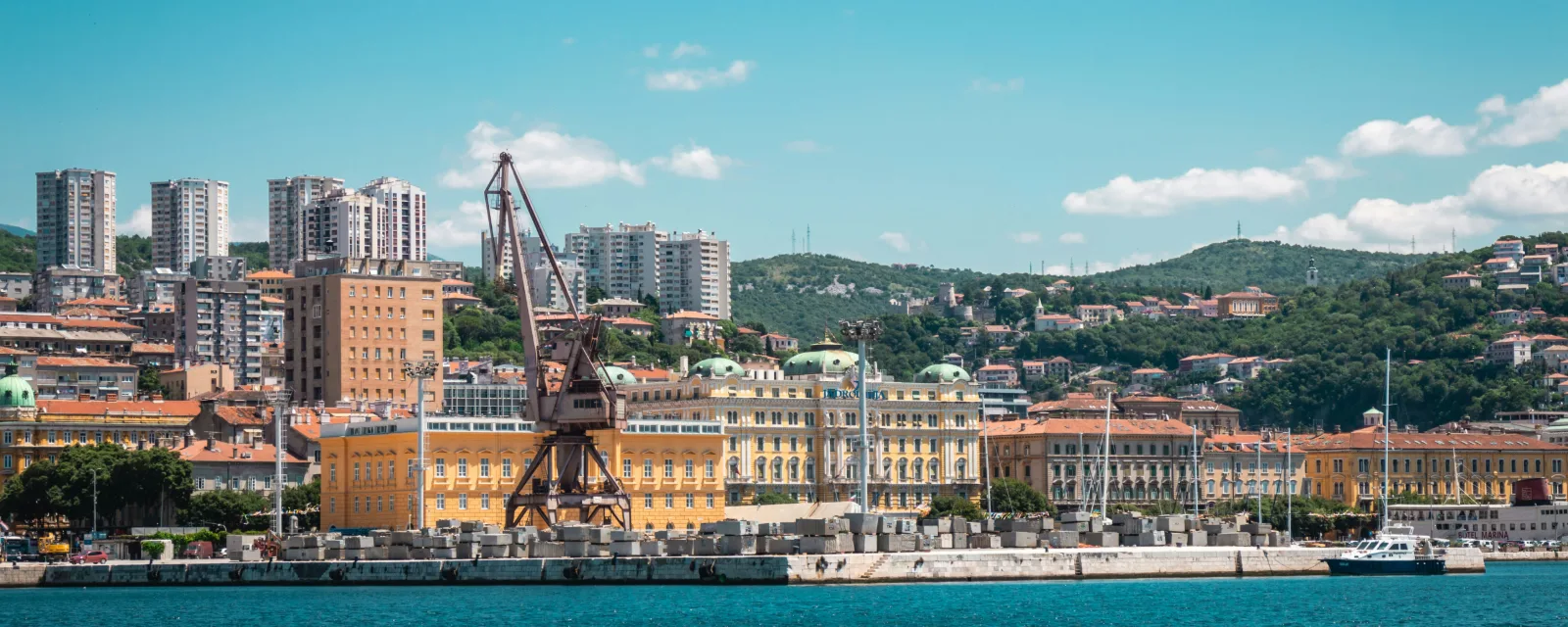
Rijeka is Croatia's largest port and a city most travellers only see from the car, on their way to Istria or the islands. Those who stop find something quite different from the rest of the coast. It's a big, working-class, slightly rough city, with Austro-Hungarian palaces, cranes in the harbour and a very lively music scene. Rijeka doesn't try to please tourists, and that's exactly what makes it interesting. It's alive all year, not just for two summer months.
Things to do
The whole city comes out onto the Korzo, a wide pedestrian street, and that's where to start. A passage under the City Tower leads into the old town, with its Roman arch and St Vitus Cathedral, round and unusual. Then go up to Trsat, the hill above the city, by the stairs or by bus. At the top are a medieval castle with a café on the walls and a shrine pilgrims have been visiting for centuries. In the morning, see the market by the port, in three old pavilions, of which the fish hall is the finest. A three-hundred-metre military tunnel also runs under the old town, and you can walk through it for free.
Tips
The best time to come is January or February, during the carnival. On the last Sunday, thousands of masked participants parade through the city, among them the zvončari, men in sheepskins with huge bells around their waists. In summer, people swim at the city beaches or go to Opatija, about fifteen kilometres away. There you'll find the Lungomare, a promenade that follows the sea all the way to Lovran. In the evening, look for a club with live music, because Rijeka is known for rock. For food, stay local: try Kvarner scampi and fish, and take home a morčić, a small black-and-white piece of jewellery that is the symbol of the city.
Did you know?
The world's first torpedo was made in Rijeka in 1866. It was conceived by local naval officer Ivan Lupis and developed by English engineer Robert Whitehead. That's why you can still see the old ramp in the harbour from which torpedoes were launched in tests. There are 561 steps up to Trsat, and the first were built in the 16th century on the orders of the military commander Petar Kružić. According to tradition, the Virgin Mary's house from Nazareth stood on Trsat for a few years in the late 13th century before it was moved to Loreto. Rijeka was a European Capital of Culture in 2020.