

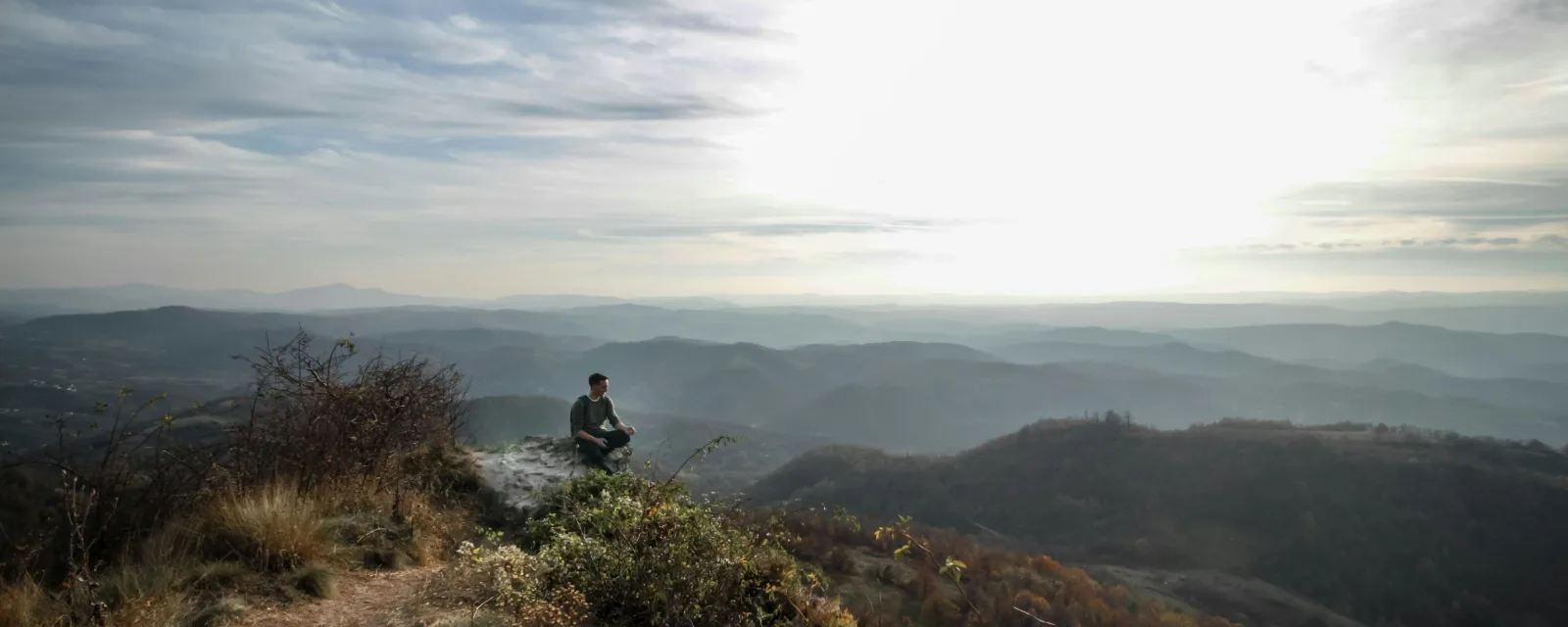
Rudnik
Rudnik is a mountain in the very centre of Šumadija, and also a village on its slopes at about 700 metres, known as an air spa. The mountain is neither high nor difficult, but it's densely wooded, with beech, oak and clear streams, so summers are cool and the air is fresh. It's about two hours from Belgrade, which makes Rudnik popular for short breaks, school trips and recovery. There's no ski resort here and no big crowds, just forest, trails and silence.
Things to do
The best-known peak is Ostrvica, a cone of rock that rises out of the forest and can be seen from afar, with the remains of a medieval fortress at the very top. The trail there takes about an hour and a half, and the last part is steep and rocky. Cvijić Peak, the highest on the mountain, is easier and makes a nice half-day walk. Nearby are the Voljavča and Vraćevšnica monasteries, and about twenty kilometres away are Takovo and Gornji Milanovac. People walk, cycle and gather herbs on the mountain, and the villages have guesthouses with rooms.
Tips
For Ostrvica, wear shoes with a good grip and don't go in the rain, because the rock gets slippery. Rudnik suits families with children and older visitors, as there are many easy trails. Stay at a village guesthouse and eat Šumadija food: kajmak, cornbread, roast meat, gibanica and plum preserve. Take home local honey and rakija. Rudnik combines easily with Oplenac, Aranđelovac or the Ovčar-Kablar Gorge, all an hour's drive away or less.
Did you know?
The mountain's name comes from the word for mine. Lead, zinc and silver were mined here as early as Roman times, and in the Middle Ages Rudnik was one of the richest mining towns in the Serbian state, with its own mint. Cvijić Peak, at 1,132 metres, is named after the geographer Jovan Cvijić. Ostrvica is the remnant of an ancient volcano. In Takovo in 1815, Prince Miloš started the Second Serbian Uprising.