

Skoplje
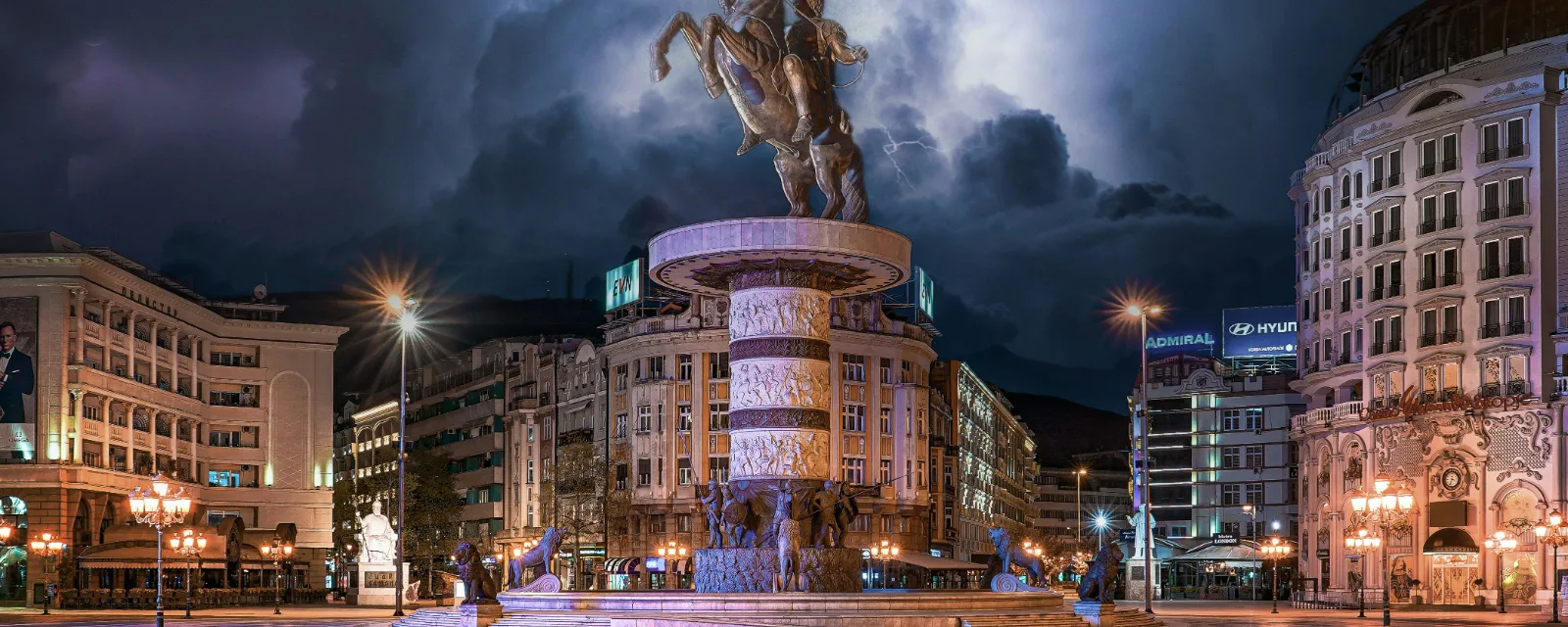
Skopje is the capital of North Macedonia, on the Vardar river, and a city with two faces. On one side of the river is a centre full of new buildings, monuments and fountains, and on the other, across the Stone Bridge, the Old Bazaar, one of the largest old bazaars in the Balkans. The city is lively, affordable and welcoming, with good food and low prices. Summers are very hot, but Matka Canyon and Mount Vodno, where it's cooler, are half an hour away.
Things to do
Cross the Stone Bridge and go into the Old Bazaar, with mosques, hammams, caravanserais and craftsmen's shops. Climb up to Kale Fortress, with a view of the river and the whole city. In the centre, see the Mother Teresa Memorial House, as she was born in Skopje, and the old railway station with its clock stopped at the moment of the earthquake. A cable car goes up Vodno to the Millennium Cross at the top. Matka Canyon, about fifteen kilometres from the city, has a lake, monasteries on the shore and the Vrelo Cave, reached by boat or kayak.
Tips
In the Old Bazaar, eat ćevapi, pastrmajlija and tavče gravče, and for dessert baklava or tulumbe. Come to Matka in the morning, while the canyon is shady and not too busy, and bring a swimsuit if you'd like to swim. Choose a clear day for Vodno, because the view from the cross is a big part of the experience. Skopje is a good stop on the way to Greece, and it combines easily with Ohrid, three hours' drive away. The currency is the denar, but euros are often accepted.
Did you know?
On 26 July 1963 Skopje was struck by a strong earthquake that destroyed much of the city, and the clock on the old railway station still shows 5:17, the moment the ground shook. Afterwards the city was rebuilt with help from all over the world. Mother Teresa, Nobel laureate and saint, was born in Skopje in 1910. The Millennium Cross on Vodno is 66 metres high and one of the largest crosses in the world. The Stone Bridge is mentioned as early as the 15th century and is the symbol of the city.