

Solun
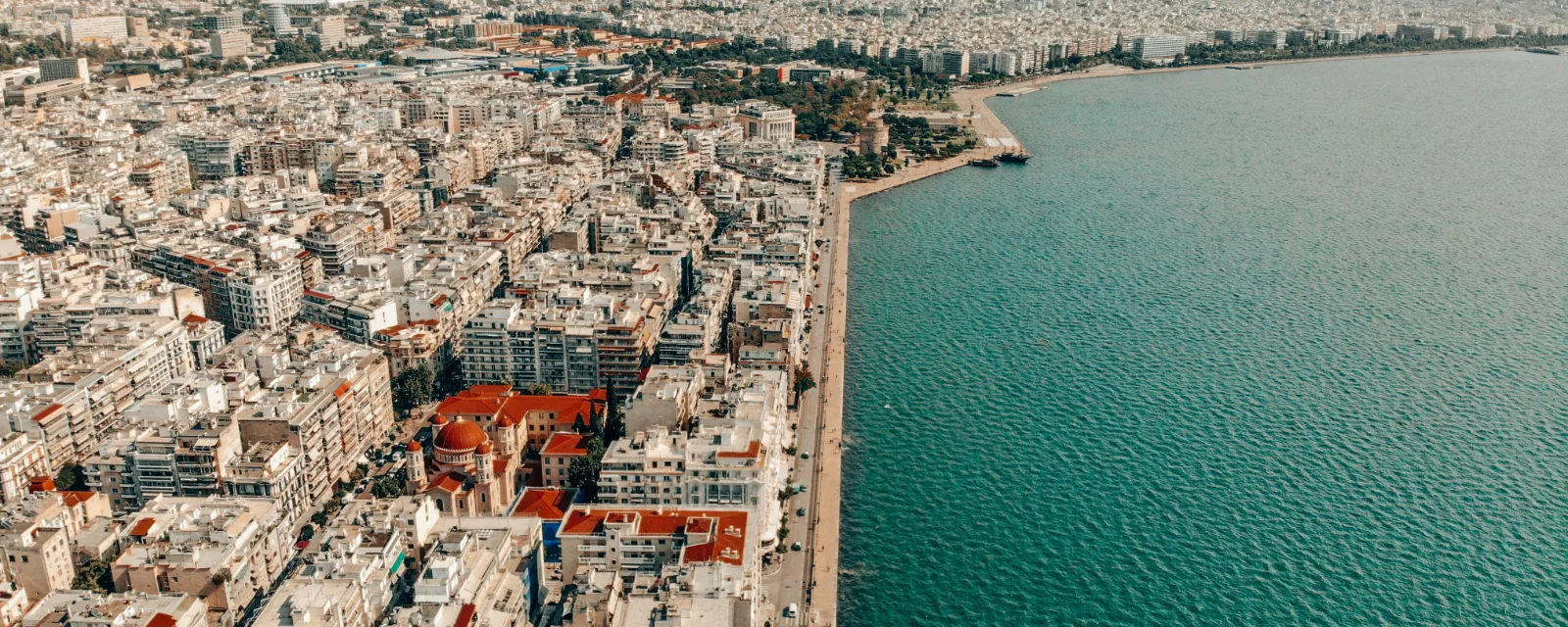
Thessaloniki is the second-largest city in Greece and a place almost everyone from the Balkans passes on the way to the Greek coast. Many simply drive around it, which is a pity. It's a lively, young, slightly untidy city on the shore of a gulf, with a long seafront promenade, students in every café and food that makes even Greeks call it the capital of good eating. Beneath the modern buildings are Roman, Byzantine and Ottoman ones, so on the same corner you'll often find a church fifteen centuries old and a bar that opened last year.
Things to do
Start at the White Tower, the symbol of the city, and walk along the shore, past the statue of Alexander the Great and the Umbrellas sculpture. From Aristotelous Square, which opens straight onto the sea, go into the Kapani and Modiano markets, among stalls of fish, olives and spices. Along the main street are the Arch of Galerius and the Rotunda, and a little above them the Church of St Demetrius, the city's patron saint, with a crypt beneath the altar. Climb to Ano Poli, the Upper Town, the only part that survived the great fire, with old houses, cobbles and Byzantine walls. At Zeitenlik, the Serbian military cemetery from the First World War, several thousand Serbian soldiers are buried.
Tips
Take a taxi or bus up to the Upper Town and walk back down, ideally before sunset. Leave your car in a garage, because parking in the centre is almost impossible, and get around on foot. For breakfast have bougatsa, a pastry filled with custard or cheese, and a sesame koulouri. In the evening, go to Ladadika, the former oil merchants' quarter, now full of tavernas and bars. Bring flowers or a candle to Zeitenlik, and the cemetery's keeper is happy to talk about its history. If you like shopping, there's Tsimiski Street.
Did you know?
Thessaloniki was founded in 315 BC by the Macedonian king Cassander, who named it after his wife Thessalonike, half-sister of Alexander the Great. The brothers Cyril and Methodius, creators of the first Slavic alphabet, came from Thessaloniki. Fifteen early Christian and Byzantine monuments in the city are on the UNESCO list. The great fire of 1917 destroyed almost the entire centre, which was then rebuilt to a new plan. Mustafa Kemal Atatürk was born in Thessaloniki in 1881, and the house where he was born is now a museum. Frappé, the iced coffee without which a Greek summer is unthinkable, was invented here, at the trade fair in 1957.