

Tara
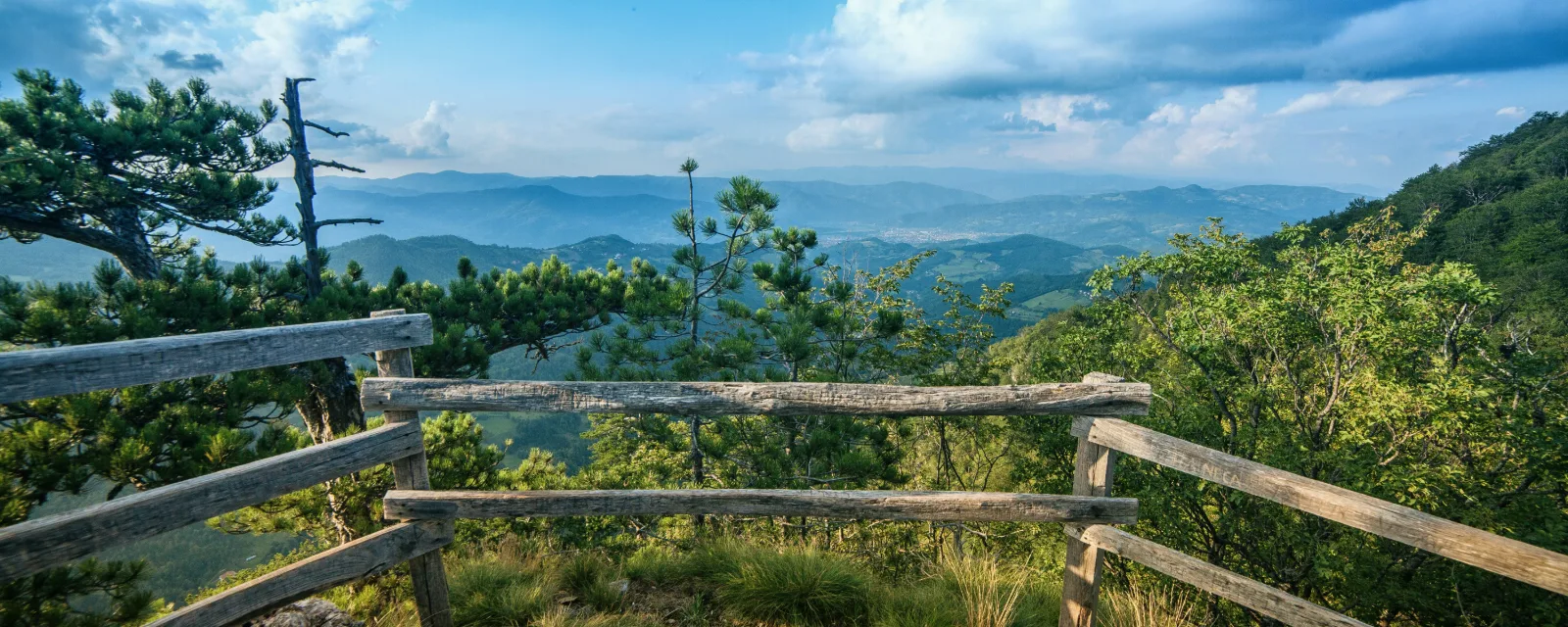
Tara is a mountain in western Serbia, above the town of Bajina Bašta, where the Drina forms the border with Bosnia. It isn't high or harsh. It's more like a large forested plateau that drops suddenly into canyons at its edges, so from the viewpoints you look straight down at the river and the lake. The forest is thick and dark, full of fir, spruce and beech, and the temperature falls by a few degrees the moment you step into it. People come to Tara for peace. There's no promenade and no noise, and in the evening all you hear is the wind in the treetops.
Things to do
Most visitors go to Banjska Stena first, and with good reason. The trail from Mitrovac runs through the forest, almost on the flat, and in a little over an hour you come out onto a rock with the Drina and Lake Perućac below you. If that's too much walking, try the Crnjeskovo viewpoint near Kaluđerske Bare, which takes about twenty minutes to reach. Lake Zaovine is best seen by bike or car, stopping wherever you like, and in summer you can swim in it. At the foot of the mountain, in Perućac, people swim from floating decks and take boat rides through the Drina canyon. For those who like more serious hiking, the national park has dozens of marked trails.
Tips
Go to the viewpoints early in the morning. The mist is still rising from the canyon then, and you'll have the rock to yourself. Bring a jacket even in midsummer, because evenings on the mountain are cold no matter how hot it is down below. Keep one day for Mokra Gora, a ride on the Šargan Eight railway and a walk around Drvengrad, all less than an hour's drive away. On the way, stop at Rača Monastery and at the little house on a rock in the middle of the Drina near Bajina Bašta. Eat what comes from here: kajmak, cheese, smoked ham, lamb and trout from the fish farm in Perućac. In the forest, stick to the marked trails, because there's no phone signal in many places.
Did you know?
Tara is the last natural home of the Serbian spruce, a slender conifer that survived the Ice Age. Botanist Josif Pančić spent years looking for it, following villagers' stories, and finally found it in 1875 in the hamlet of Đurići. The mountain also has the largest brown bear population in Serbia, though visitors almost never see one. Near Perućac rises the Vrelo, a river that drops into the Drina over a waterfall after exactly 365 metres, which is why it's called the Year. Tara has been a national park since 1981.