

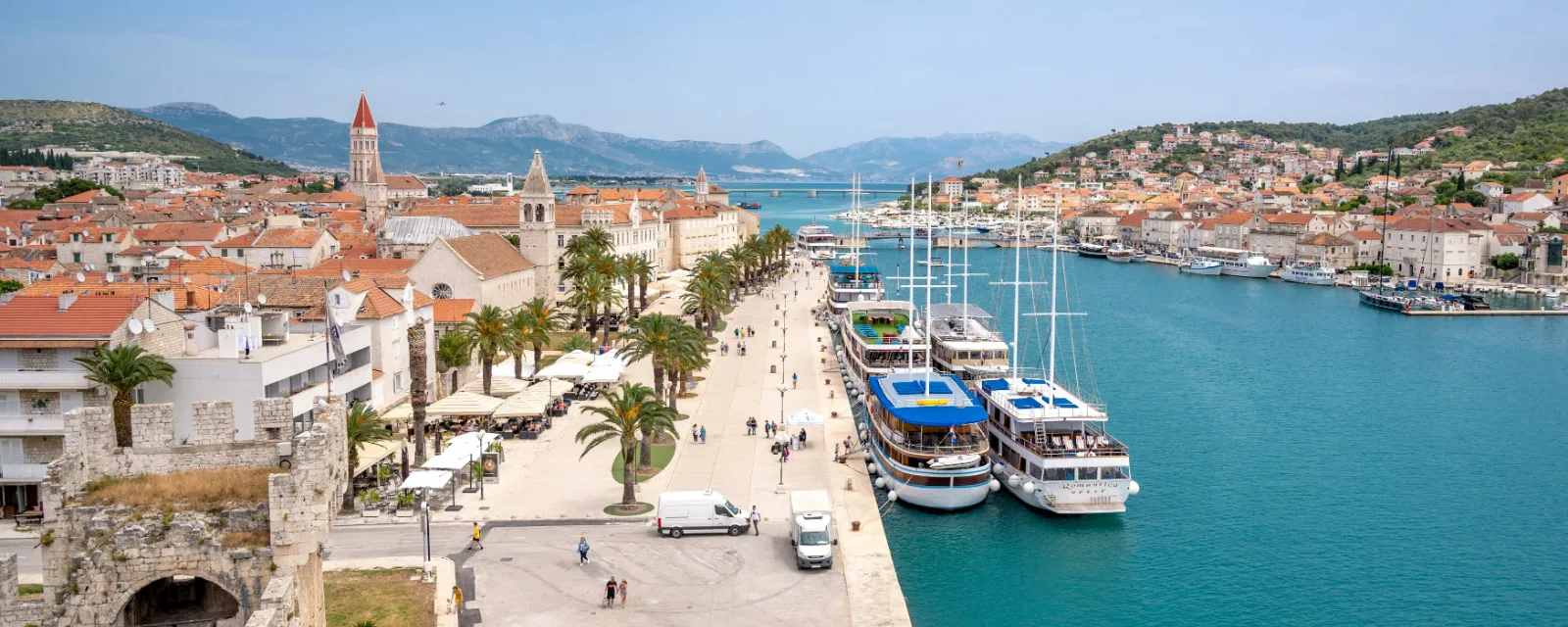
Trogir
Trogir is a small town on an islet between the mainland and the island of Čiovo, joined by bridges on both sides, about thirty kilometres from Split. The whole old town fits into a few hundred metres, yet it holds churches, palaces, a loggia and a fortress from almost every period, from Greek to Venetian. That's why it's called a museum town, but people still live here: there are taverns and shops on the ground floors, and in the evening people sit on the waterfront until midnight. Trogir is close to Split airport, so for many it's their first or last stop in Dalmatia.
Things to do
Walk from the North Gate to the main square, with St Lawrence's Cathedral, the Town Loggia and the Ćipiko Palace. Look at Radovan's portal at the cathedral entrance, with figures of people, animals and scenes from daily life, and climb the bell tower for the view. Then go out onto the waterfront, with its palms and yachts, and walk to Kamerlengo Fortress at the western end, which hosts concerts and screenings in summer. Cross the bridge to Čiovo, with the beaches at Okrug, and boats from Trogir go to Šolta and the Blue Lagoon.
Tips
The old town is small, so explore it in the morning or evening, when the day-trippers have gone. Leave your car at a car park on the mainland and walk across the bridge. For swimming, go to Čiovo, to Okrug Gornji or the coves on the island's south side. Have dinner at a tavern in the narrow streets and order fish, and for dessert rafioli, a Trogir pastry with almonds. Split is half an hour by bus, and there's a boat along the coast too.
Did you know?
Trogir was founded in the 3rd century BC by Greeks from the island of Vis, who called it Tragurion. The old town has been on the UNESCO World Heritage List since 1997. The cathedral portal was carved by Master Radovan in 1240, and he signed it, which was rare at that time. Kamerlengo Fortress was built in the 15th century, in Venetian times.